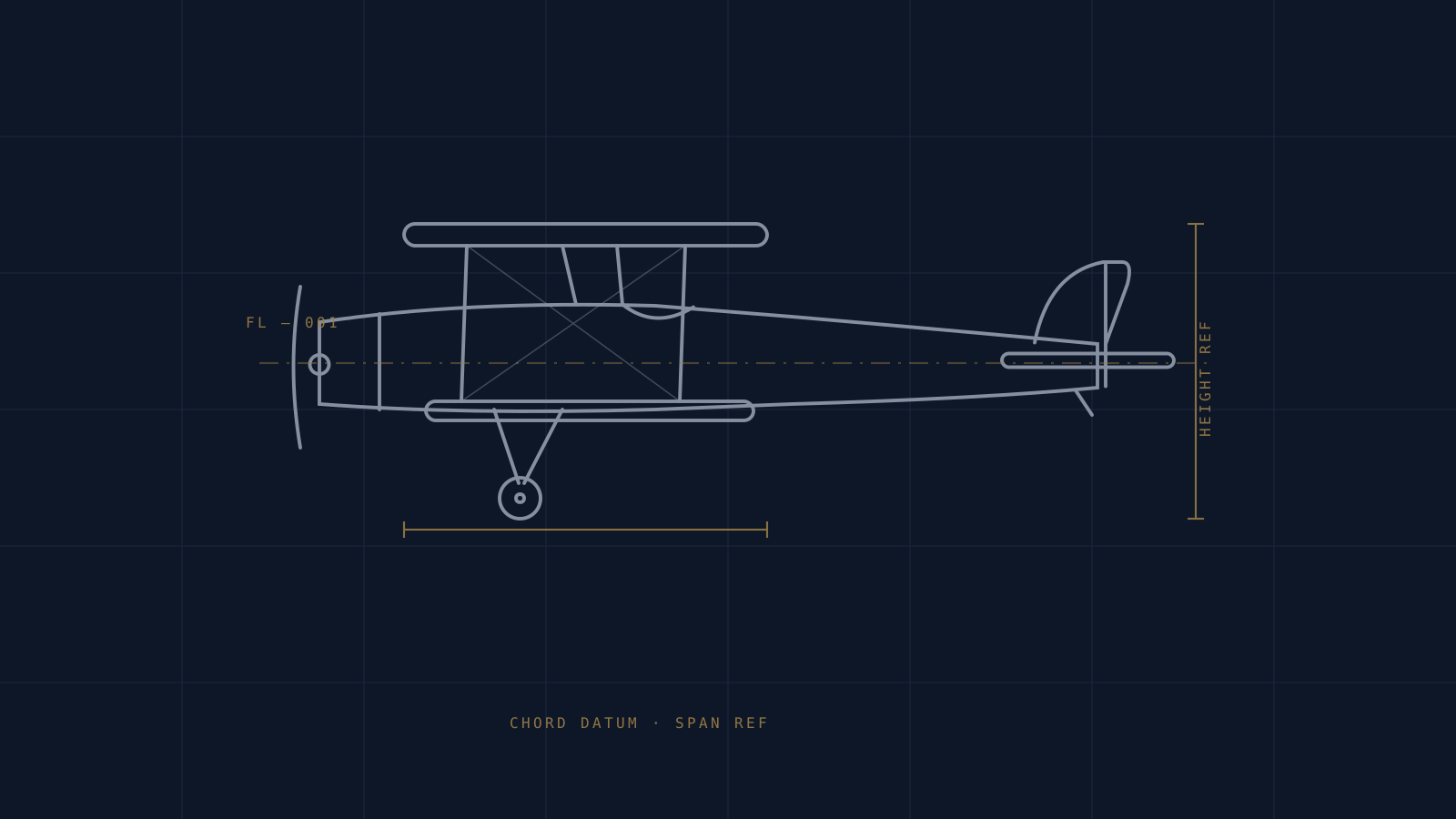
Everything in Mass & Balance comes back to one relationship: where the weight is, relative to a fixed reference point. Get comfortable with datum, moment, and CG, and the rest of the subject — loading envelopes, trim sheets, index units — is just this same idea applied with more variables.
Datum, Moment & Centre of Gravity
The datum is a fixed reference point from which every lever arm (distance) is measured. It's set by the manufacturer, and it can sit ahead of the nose, at the nose, or behind the aircraft entirely — wherever it is, the datum is not the CG. It's just the zero point the maths is measured from.
Moment = Mass × Distance from datum
Moment is the turning force a mass creates by acting over a distance. Moments forward of the datum are negative; moments aft of the datum are positive. Large, awkward numbers are often divided by a constant (a "moment index") just to keep the arithmetic manageable.
Finding the Centre of Gravity
CG Position = Total Moment ÷ Total Mass
The method: add up the individual moments (mass × arm) for every item — empty aircraft, plus each item of load, considered separately — to find where the total mass acts. Then divide that total moment by the total mass. When everything is measured to the right of the datum, that's treated as the positive direction.
| Item | Mass (lb) | Arm (cm) | Moment (lb·cm) |
|---|---|---|---|
| Nose wheel | 376 | +67 | +25,192 |
| Left mainwheel | 971 | +171 | +166,041 |
| Right mainwheel | 960 | +171 | +164,160 |
| Totals | 2,307 | +355,393 |
Since positive means aft of datum: CG is 154 cm aft of datum.
BEM = Basic Empty Mass.